
Objectives of SKiLL
The SKiLL program supports teachers in promoting social and linguistic skills among children in grades 4 and 5. The intervention program focuses on small group discussions about high-quality children's books on topics such as fairness, social inclusion, and moral courage.
You can get a quick overview of the SKiLL concept by watching the explanatory video.
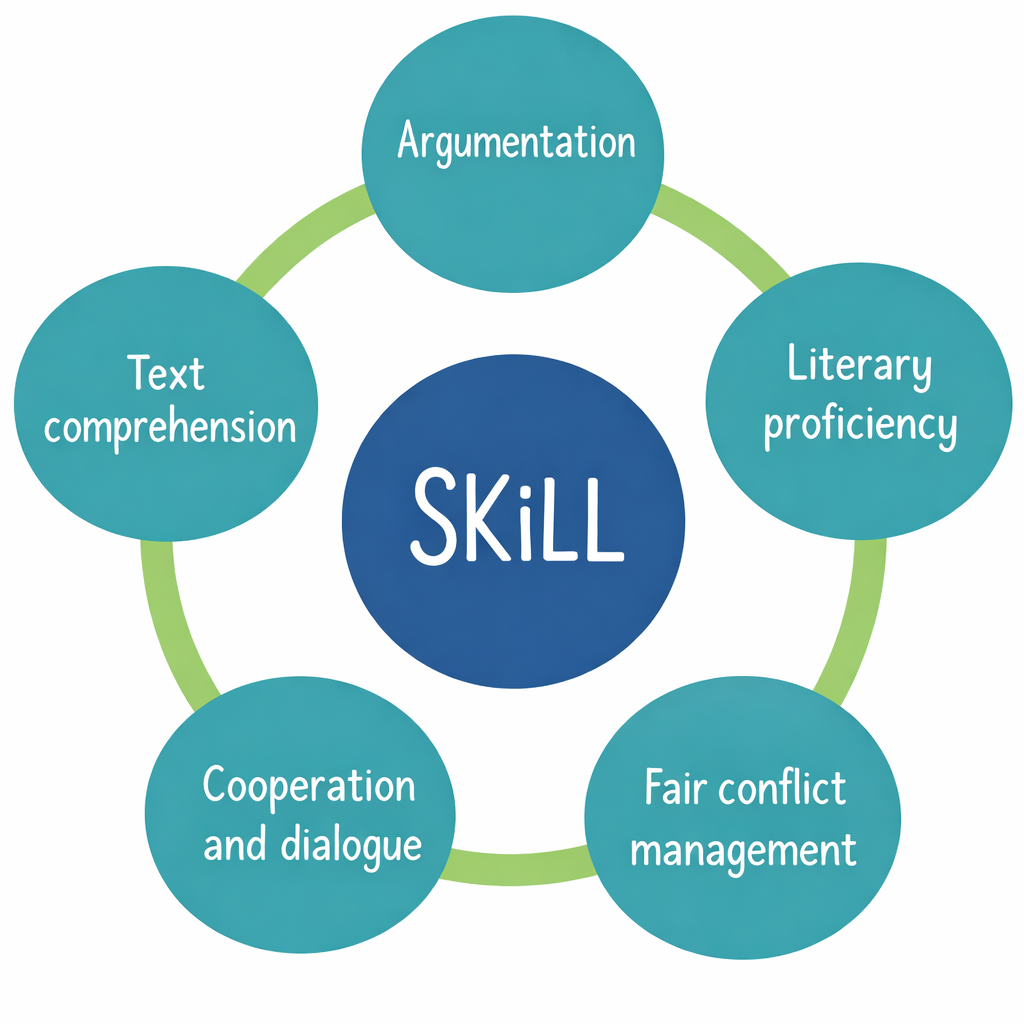 SKiLL effectively addresses a wide range of skills in the subjects German, nature, people, society, and the interdisciplinary area of Curriculum 21.
German
Nature, people, society
For example:
Transversal skills
One of SKiLL's particular strengths is its integrated promotion of interdisciplinary skills within subject teaching. SKiLL promotes interdisciplinary skills such as reflection and argumentation skills, independence, dialogue and cooperation skills, conflict management skills, and how to deal with diversity.
For example:
- Students can weigh up arguments and form their own opinion, (...) even if this contradicts prevailing opinions/expectations.
- Students can put themselves in another person's situation and understand what that person is thinking and feeling.
- Students can apply forms and methods of constructive conflict management.
- Students can treat people with respect who have different learning prerequisites or who differ in terms of gender, skin color, language, social background, religion, or lifestyle.
How does SKiLL work?
Methodologically, SKiLL is based on Quality Talk (QT) (www.qualitytalk.psu.edu) – an approach that combines literary discussions with the promotion of text comprehension and critical thinking.
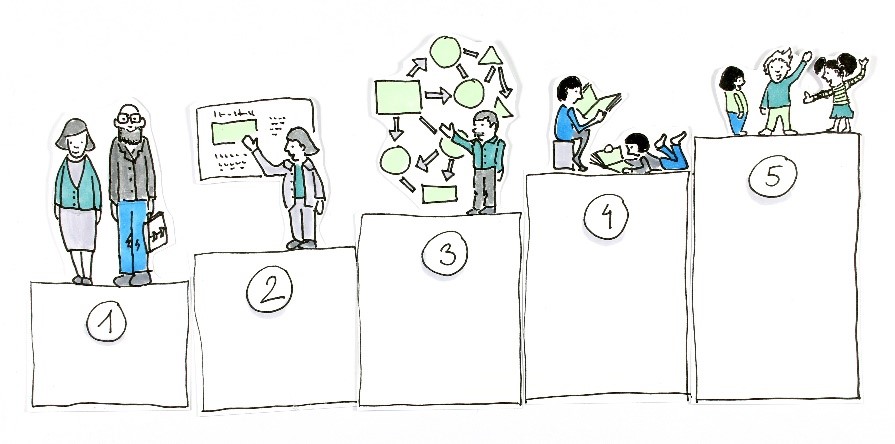
- SKiLL begins with a workshop that introduces teachers to the ideas and materials of the program.
- Through mini-lessons with PowerPoint presentations, animated videos, and exercises, students are shown how to ask interesting questions about texts and respond to them with arguments.
- In social lessons, children are introduced to social issues that play an important role in children's books (e.g., what is a prejudice?). The activities in these lessons include games, short videos, brainstorming, and discussions about short stories.
- The students then read the children's books and keep a reading journal (e.g., quizzes on the children's books).
- Finally, the children discuss the books in small groups. The students take the lead in these discussions by asking each other questions about the text, sharing their personal experiences and feelings, and negotiating interpretations of the text through dialogue. Teachers support the discussions using special moderation techniques.
How extensive is SKiLL?
Participation in the program includes the following components:
- two professional development sessions (onsite)
- implementation of the program in the school class (extend can be selected individually; approx. 25 to 60 lessons)
- In addition, coaching sessions can be booked to specifically improve your own conversation techniques.
What are the benefits for teachers?
As a participating teacher, you will receive...
- innovative training that improves the quality of school conversations
- ready-made and varied teaching materials on four high-quality children's books
- the opportunity to borrow the children's books in class sets
- online coaching (via Teams) by an experienced coach can also be booked
- a continuing education certificate for 2.5 days (11 hours of in-person training, 9 hours of self-study of the materials), plus coaching hours