
30. September 2026, Sherin Attoun (PHBern), Sabine Williner (PHBern), Andreas Jäggi (PHBern)
Heute war der National Day for Truth and Reconciliation, und wir starteten den Tag mit der Teilnahme am Grand Entry, der Eröffnungszeremonie im Fort Edmonton Park. Die Zeremonie wurde von Chiefs und Elders verschiedener indigener Gemeinschaften sowie von Regierungsvertreter*innen eröffnet. Zentral waren die Berichte der Elders über ihre eigenen Erfahrungen oder jene ihrer Gemeinschaften mit den Residential Schools. In diesen Schulen wurden indigene Kinder (First Nations, Métis und Inuit) gewaltsam von ihren Familien getrennt. Ihnen wurde verboten, ihre Sprache zu sprechen oder indigene Praktiken auszuüben, und viele waren körperlicher, emotionaler und sexueller Gewalt ausgesetzt. Heute erfuhren wir, dass noch rund 80'000 Überlebende des Residential-School-Systems in Kanada leben, während Tausende Kinder in den Residential Schools an Krankheiten, Vernachlässigung oder Misshandlungen starben.
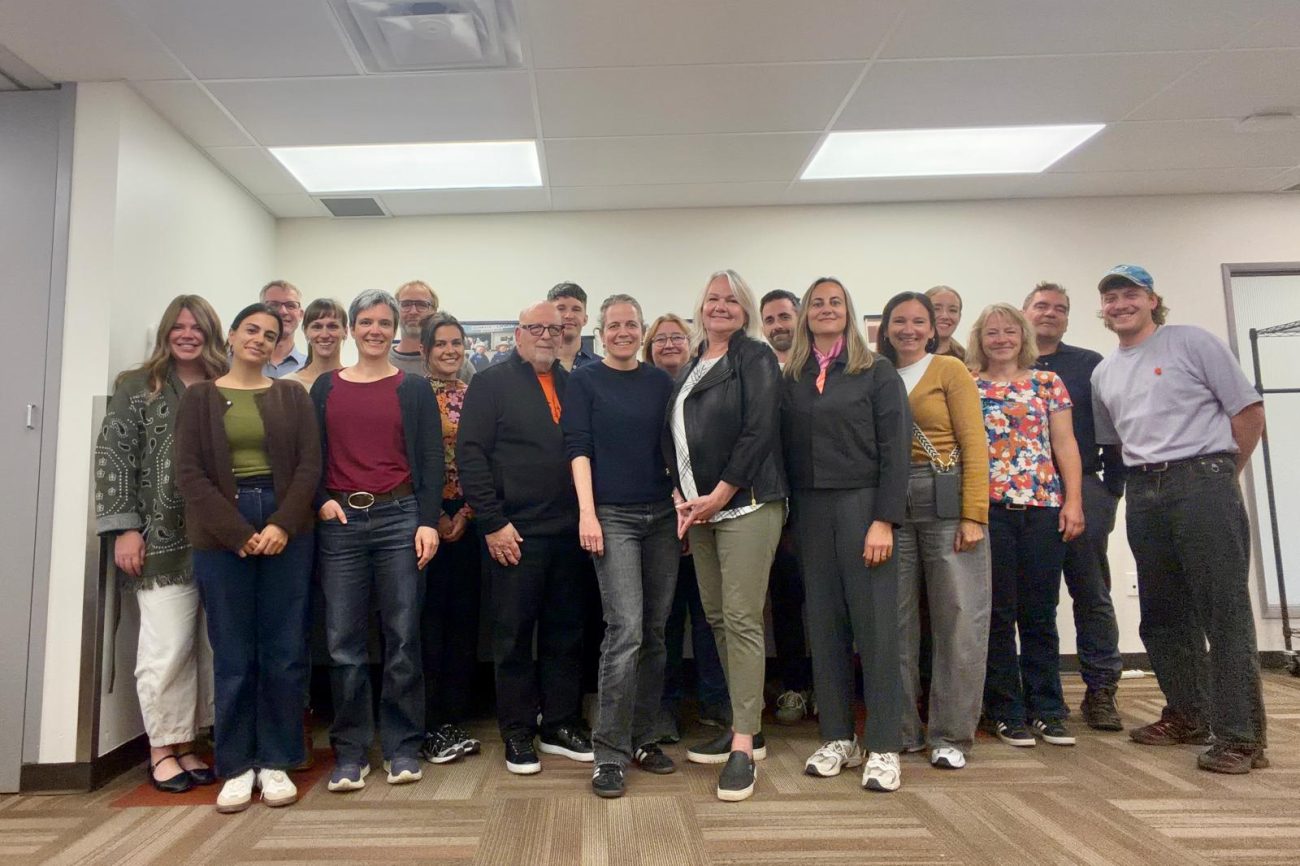
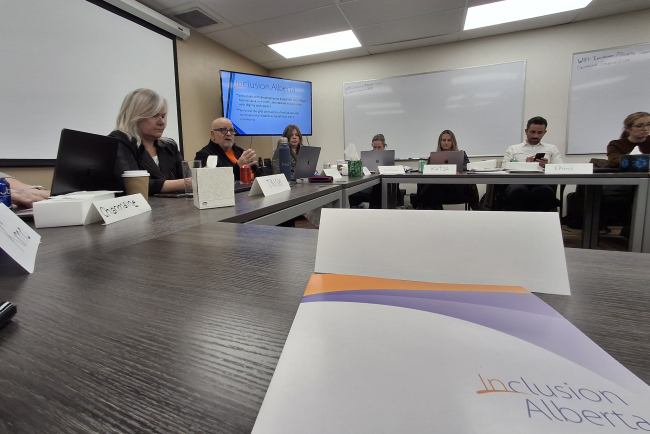
Den Nachmittag verbrachten die Teilnehmenden der Studienreise bei der Organisation Inclusion Alberta, die im Bereich der inklusiven Hochschulbildung international eine Pionierrolle einnimmt. Der emeritierte CEO Bruce Uditsky gab einen Überblick über die Tätigkeitsfelder der Organisation. Inclusion Alberta begleitet und unterstützt Menschen mit kognitiven Behinderungen und ihre Familien über die gesamte Lebensspanne – von inklusiver Bildung über Freizeit und gesellschaftliche Teilhabe bis hin zu Hochschulbildung, Arbeit und selbstbestimmtem Leben. Im Zentrum unseres Besuchs stand die inklusive Hochschulbildung (Inclusive Post-Secondary Education), die Inclusion Alberta seit mehr als 30 Jahren gemeinsam mit Hochschulen in der ganzen Provinz weiterentwickelt.
Grundlage dieses Ansatzes ist das Normalisierungsprinzip: Menschen mit kognitiven Behinderungen sollen dieselben Bildungs- und Lebenswege offenstehen wie Menschen ohne Behinderungen. Ihre Lebenswege sollen nicht durch vorgegebene Sonderstrukturen bestimmt sein, sondern sich, wie bei anderen Menschen auch, individuell, offen und nicht vollständig planbar entwickeln können. An den beteiligten Hochschulen besuchen die Studierenden deshalb reguläre Studienprogramme und Lehrveranstaltungen gemeinsam mit anderen Studierenden. Sie verfolgen individuell angepasste Lernziele und bearbeiten entsprechend angepasste Leistungsnachweise. Unterstützung erfolgt durch Educational Facilitators, die eng mit den Studierenden, Dozierenden und weiteren Hochschulangehörigen zusammenarbeiten. Dabei sollen möglichst keine parallelen Sonderstrukturen entstehen. Vielmehr werden die Studierenden mit den regulären Angeboten und Unterstützungsstrukturen für alle Studierenden vernetzt und nehmen selbstverständlich auch am sozialen Campusleben teil. Auch der Übergang in eine bezahlte Arbeit wird von Beginn an mitgedacht.
Grundlage des Engagements ist die tiefe Überzeugung, dass alle Menschen ein Anrecht auf ein gutes Leben haben und Menschen mit Behinderungen dieselben Lebenswege offenstehen sollen wie Menschen ohne Behinderungen. Damit Menschen mit Behinderungen Zugang zu (Hochschul-)Bildung erhalten und sich auch dazu befähigt fühlen, arbeitet Inclusion Alberta intensiv mit den Familien der betroffenen Studierenden zusammen. Dabei ist es den Verantwortlichen besonders wichtig, auch weniger privilegierte Familien zu unterstützen und ihre (erwachsenen) Kinder mit Behinderungen auf ihrem Weg an die Hochschule zu ermutigen.
Die Organisation berichtete zudem von ihren Bemühungen, Menschen aus verschiedenen marginalisierten Gruppen einzubeziehen, und betonte dabei die Bedeutung von langfristiger Beziehungsarbeit und Vertrauensaufbau. Gleichzeitig wurde darauf hingewiesen, dass Zurückhaltung oder Misstrauen gegenüber Bildungsinstitutionen oft eine nachvollziehbare Reaktion auf langjährige Erfahrungen von gesellschaftlicher Ausgrenzung und Diskriminierung sind. Das zeigt sich besonders deutlich in den Erfahrungen indigener Gemeinschaften mit Bildungsinstitutionen.
Auf die Frage von Marc Eyer, Leiter des Instituts für Sekundarstufe II, wie die Hochschule zu einem Ort für alle Lernenden werden könnte, antwortete Trish Bowman, CEO von Inclusion Alberta, dass sich das Universal Design for Learning bei den involvierten Partnerinstitutionen als wertvolles Konzept bewährt habe. Bedeutsam war die Erkenntnis, dass dies mit einem Paradigmenwechsel einhergeht. Zeit und die Bereitschaft, zu beginnen und während des Tuns zu wachsen, seien ebenso nötig wie eine kontinuierliche Reflexion von Beginn an. Bruce Uditsky ergänzte die Antwort mit zwei Schlagwörtern: Für eine inklusive Hochschule brauche es "relations and leading", also Beziehungsaufbau und klare Führung in eine inklusive Richtung.
Das Team um Caroline Sahli Lozano stellte zum Abschluss des Studientages ein Projekt aus der strategischen Hochschulentwicklung (StraHE) zur Weiterentwicklung der Diplomausbildung Fachperson Inklusion (F-INK) vor. Anschliessend diskutierten die Teilnehmenden über das gemeinsame Verständnis von Inklusion und die Frage, was inklusive Hochschulbildung für die PHBern konkret bedeutet. Im Zentrum standen die Chancen und Herausforderungen bei der Umsetzung entsprechender Programme und die Rolle der Hochschule als Ganzes. Gemeinsam wurde diskutiert, welche Rahmenbedingungen es dafür braucht, wie bestehende Angebote genutzt und wie die verschiedenen Bereiche der Hochschule sinnvoll einbezogen werden können.
Dieser Beitrag gibt die persönlichen Eindrücke der Verfassenden wieder.
English
A University for All: Insights from Inclusion Alberta
Today was the National Day for Truth and Reconciliation, and we began the day by attending the Grand Entry, the opening ceremony at Fort Edmonton Park. The ceremony was led by Chiefs and Elders from various Indigenous communities, together with government representatives. At the heart of the ceremony were accounts shared by Elders about their own experiences, or those of their communities, with the Residential School System. In these schools, Indigenous children (First Nations, Métis and Inuit) were forcibly separated from their families. They were forbidden from speaking their languages or practising Indigenous traditions, and many were subjected to physical, emotional and sexual abuse. We learned that approximately 80,000 Survivors of the Residential School System are still living in Canada today, while thousands of children died at residential schools as a result of disease, neglect or abuse.
The delegation spent the afternoon with Inclusion Alberta, which plays a pioneering role internationally in inclusive post-secondary education. CEO Emeritus Bruce Uditsky provided an overview of the organization’s areas of work. Inclusion Alberta supports people with intellectual disabilities and their families throughout their lives – from inclusive education, recreation and community participation to post-secondary education, employment and self-determined living. Our visit focused on Inclusive Post-Secondary Education, which Inclusion Alberta has been developing in partnership with post-secondary institutions across the province for more than 30 years.
This approach is based on the principle of normalization: people with intellectual disabilities should have access to the same educational opportunities and life pathways as people without disabilities. Rather than being channelled into predetermined, separate structures, their lives should be able to unfold individually and openly and, like anyone else’s, should not be fully predictable. At the participating post-secondary institutions, students therefore take part in regular programs of study and attend classes alongside other students. They pursue individualized learning goals and complete adapted assessments. Support is provided by Educational Facilitators, who work closely with students, instructors and other members of the institution. The aim is to avoid creating parallel, separate structures wherever possible. Instead, students are connected with the regular services and support systems available to all students and participate fully in social life on campus. The transition into paid employment is also considered from the outset.
This work is rooted in a deep conviction that everyone is entitled to a good life and that people with disabilities should have access to the same life pathways as people without disabilities. To ensure that people with disabilities can access post-secondary education and see it as a realistic path for themselves, Inclusion Alberta works closely with students’ families. The organization places particular importance on reaching and supporting families with fewer resources and opportunities, and on encouraging them to support their adult children with disabilities on their path to post-secondary education.
The organization also described its efforts to engage people from a range of marginalized groups, emphasizing the importance of long-term relationship-building and trust. It also highlighted that reluctance or distrust towards educational institutions is often an understandable response to long histories of social exclusion and discrimination. This is particularly evident in Indigenous communities’ experiences with educational institutions.
Marc Eyer, Head of the Institute of Upper Secondary Education, asked how higher education institutions could become places for all learners. Trish Bowman, CEO of Inclusion Alberta, responded that Universal Design for Learning had proved to be a valuable framework at the partner institutions involved. An important takeaway was that this requires a paradigm shift. It takes time, a willingness to make a start and to learn and evolve through practice, as well as continuous reflection from the outset. Bruce Uditsky added two key phrases: "relations and leading." In his view, inclusive higher education requires both relationship-building and clear leadership towards inclusion.
At the end of the study day, the team led by Caroline Sahli Lozano presented a strategic institutional development project (StraHE) focused on the further development of the Diplomausbildung Fachperson Inklusion (F-INK), PHBern’s inclusive upper secondary diploma program. The deligation then discussed their shared understanding of inclusion and what inclusive higher education could mean in concrete terms for PHBern. The discussion centred on the opportunities and challenges involved in implementing such programs and on the role of the institution as a whole. Together, the deligation explored the conditions required, how existing services could be used and how the institution’s various units could be meaningfully involved.
This article reflects the personal impressions of its authors.