
29. September 2026, Andreas Jäggi (PHBern) und Sabine Williner (PHBern)

Am zweiten Programmtag besuchte die Berner Delegation das Northern Alberta Institute of Technology (NAIT), die MacEwan University und die Concordia University of Edmonton (CUE). Im Zentrum standen die Unterstützungsangebote für Studierende und Dozierende sowie die inklusiven Hochschulprogramme in Zusammenarbeit mit Inclusion Alberta.

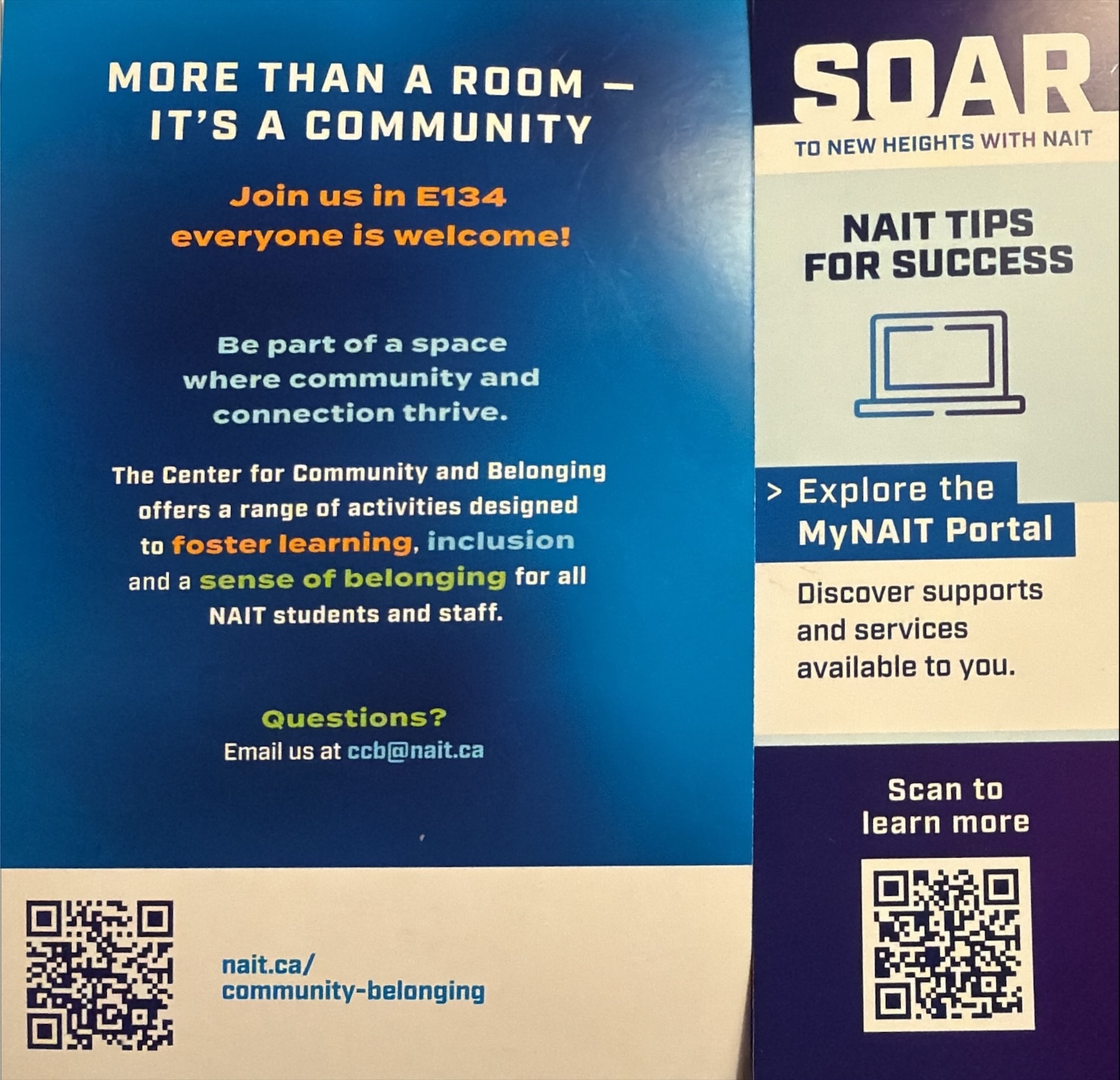
An allen besuchten Hochschulen haben Beziehungen, Zugehörigkeit und psychische Gesundheit einen hohen Stellenwert. Ziel ist, dass Studierende erfolgreich und gesund studieren können. Nicht zufällig tragen zentrale Anlaufstellen den Begriff «Student Success» im Namen. Clubs, Begegnungsräume und Beratungsangebote sollen dazu beitragen, dass sich Studierende wohlfühlen und ihr Potenzial entfalten können. Die Angebote sind auf dem Campus gut sichtbar und niederschwellig erreichbar. Am NAIT erhielt die Delegation dazu Einblicke in das Centre for Community and Belonging. Studierende gestalten die Gemeinschaft dort aktiv mit, werden für unterstützende Aufgaben gecoacht und unterstützen sich gegenseitig durch Peer-to-Peer-Angebote.
In der Lehre richtet sich Universal Design for Learning (UDL) an alle Studierenden: Unterschiedliche Lernvoraussetzungen werden bereits bei der Planung berücksichtigt. Support-Center beraten Dozierende und helfen beispielsweise, PowerPoint-Präsentationen barrierefrei aufzubereiten. Ergänzend unterstützt der Nachteilsausgleich Studierende mit spezifischen Nachteilen. Die Massnahmen werden individuell abgestimmt und begleitet. Lernziele und Lerninhalte werden dabei nicht reduziert, angepasst werden die Bedingungen des Lernens und der Leistungsnachweise. Grundsätzlich wird die Berücksichtigung unterschiedlicher Bedürfnisse von allen Beteiligten als selbstverständlicher Bestandteil einer chancengerechten Hochschulkultur und als grundlegender Anspruch anerkannt. Dozierende sind verpflichtet, entsprechende Massnahmen umzusetzen, und erhalten dafür fachliche Unterstützung.
Zusätzlich gibt es Programme in Zusammenarbeit mit Inclusion Alberta. Studierende mit kognitiven Behinderungen besuchen reguläre Lehrveranstaltungen mit individuell angepassten Curricula und Lernzielen. Facilitators begleiten sie entsprechend ihren Bedürfnissen. Im Sinne des Normalisierungsprinzips nehmen sie wie alle anderen Studierenden selbstbestimmt am Studium und an allen Aktivitäten des Campuslebens teil. An der MacEwan University und an der CUE berichteten Dozierende und Studierende über diese Zusammenarbeit und ihren Studienalltag. Nach Angaben der Beteiligten begleitet Inclusion Alberta 11 Studierende am NAIT und insgesamt 92 an verschiedenen Hochschulen in Alberta.

In der gemeinsamen Reflexion diskutierte die Delegation, welche Ansätze sich auf die PHBern übertragen lassen. Im Vordergrund standen die Haltung zu Inklusion in allen Bereichen der Hochschule und deren konkrete Umsetzung: Wie können bestehende Angebote sichtbarer werden und besser zusammenwirken? Welche Unterstützung brauchen Dozierende, und wie können Studierende mitgestalten? Dabei gilt es, die jeweiligen Ressourcen und die Lebensrealitäten der Studierenden zu berücksichtigen.
Kathrin Jost, Dozentin am Institut Sekundarstufe I, formulierte ihre Einschätzung so: «Damit Inklusion an Hochschulen wirksam wird, braucht es mehr als Strukturen: eine vertiefte Beziehungsgestaltung, Raum und Zeit für Gespräche und die Einbettung in eine Gemeinschaft, in der sich alle zugehörig fühlen.»
Wer in Edmonton ist, kommt am Eishockey kaum vorbei. Einige Mitglieder der Delegation tauschten zum Tagesabschluss deshalb den Campus gegen die Tribüne und besuchten das Heimspiel der Edmonton Oilers gegen die Vancouver Canucks in der Rogers Place.

Dieser Beitrag gibt die persönlichen Eindrücke der Verfassenden wieder.
English
How Inclusion Is Shaped at Higher Education Institutions in Alberta
On the second day of the program, the Bern delegation visited the Northern Alberta Institute of Technology (NAIT), MacEwan University, and Concordia University of Edmonton (CUE). The focus was on support services for students and faculty, as well as inclusive higher education programs offered in collaboration with Inclusion Alberta.
At all three institutions, relationships, belonging, and mental health are given high priority. The goal is to enable students to succeed academically while maintaining their health and well-being. It is no coincidence that key points of contact include the term “Student Success” in their names. Clubs, community spaces, and counseling services are designed to help students feel comfortable, build connections, and reach their full potential. These services are highly visible on campus and easy to access. At NAIT, the delegation gained insights into the Centre for Community and Belonging. Students actively help shape the community, receive coaching for supportive roles, and support one another through peer-to-peer programs.
In teaching, Universal Design for Learning (UDL) is designed to benefit all students: different learning needs and starting points are taken into account from the outset when courses are planned. Support centers advise faculty and, for example, help make PowerPoint presentations accessible. In addition, academic accommodations support students who face specific barriers or disadvantages. These measures are tailored to individual needs and accompanied throughout the process. Learning objectives and course content are not reduced; rather, the conditions under which students learn and demonstrate their knowledge are adjusted. More broadly, taking different needs into account is recognized by everyone involved as an integral part of an equitable higher education culture and as a fundamental institutional responsibility. Faculty are expected to implement appropriate measures and receive professional support in doing so.
In addition, there are programs offered in collaboration with Inclusion Alberta. Students with intellectual disabilities attend regular courses with individually adapted curricula and learning objectives. Facilitators support them according to their individual needs. In keeping with the principle of normalization, studying, access to campus services, and student life are understood as an integrated whole. Some students also live on campus. At MacEwan University and CUE, faculty and students shared their experiences of this collaboration and talked about their day-to-day lives as students. According to those involved, Inclusion Alberta supports 11 students at NAIT and a total of 92 students at various higher education institutions across Alberta.
During a joint reflection session, the delegation discussed which approaches could be applied at the Bern University of Teacher Education (PHBern). The focus was on the institution’s approach to inclusion across all areas of higher education and on how this approach can be put into practice: How can existing services become more visible and work together more effectively? What support do faculty need, and how can students play an active role in shaping their institution? At the same time, it is important to take available resources and students’ individual circumstances and lived realities into account.
Kathrin Jost, a lecturer at the Institute for Secondary Education, expressed her perspective as follows: “For inclusion to be effective in higher education, structures alone are not enough. It requires stronger relationships, space and time for conversation, and integration into a community in which everyone feels that they belong.”
Anyone spending time in Edmonton can hardly escape hockey. So, to wrap up the day, some members of the delegation swapped the campus for the stands and attended the Edmonton Oilers’ home game against the Vancouver Canucks at Rogers Place.
This article reflects the personal impressions of the authors.