5 October 2026, Katja Saxer (PHBern)
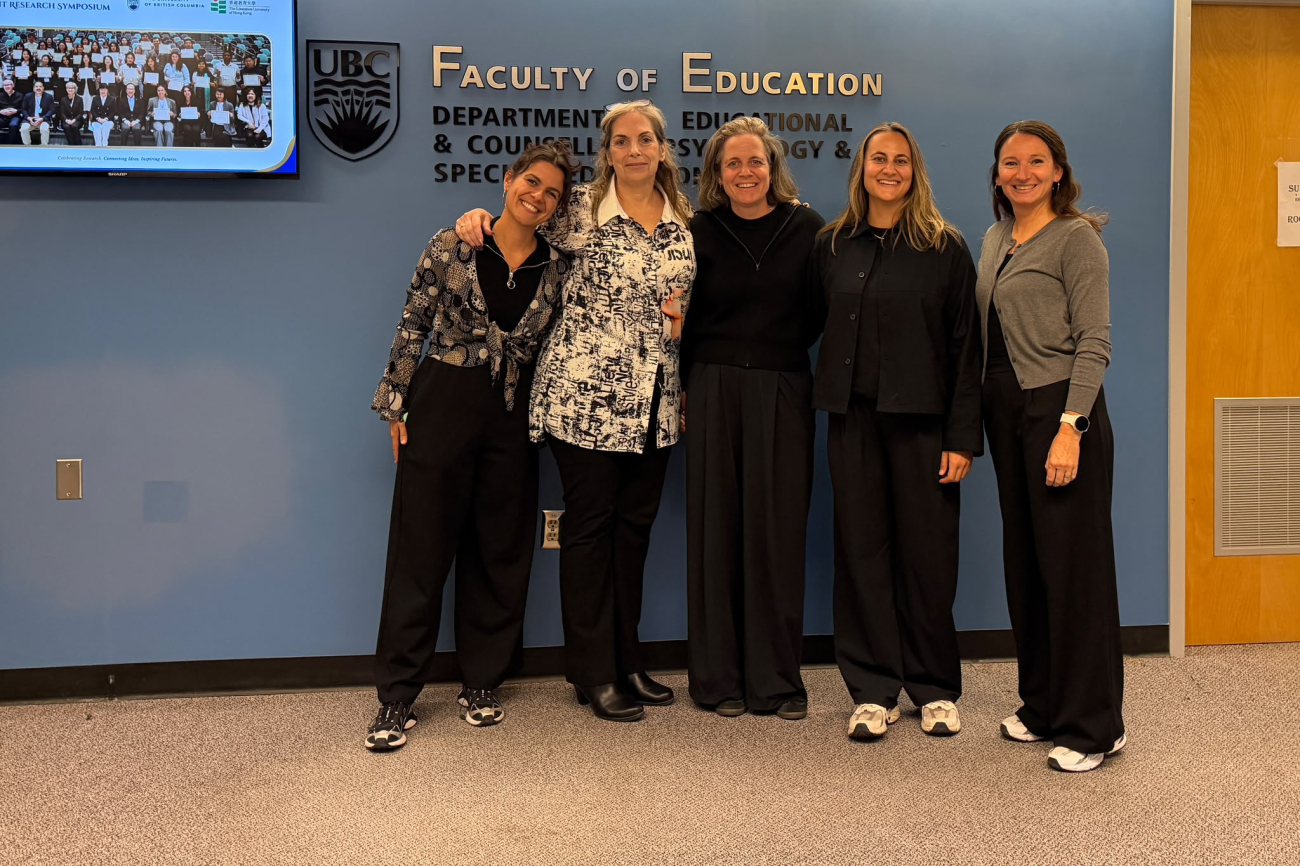
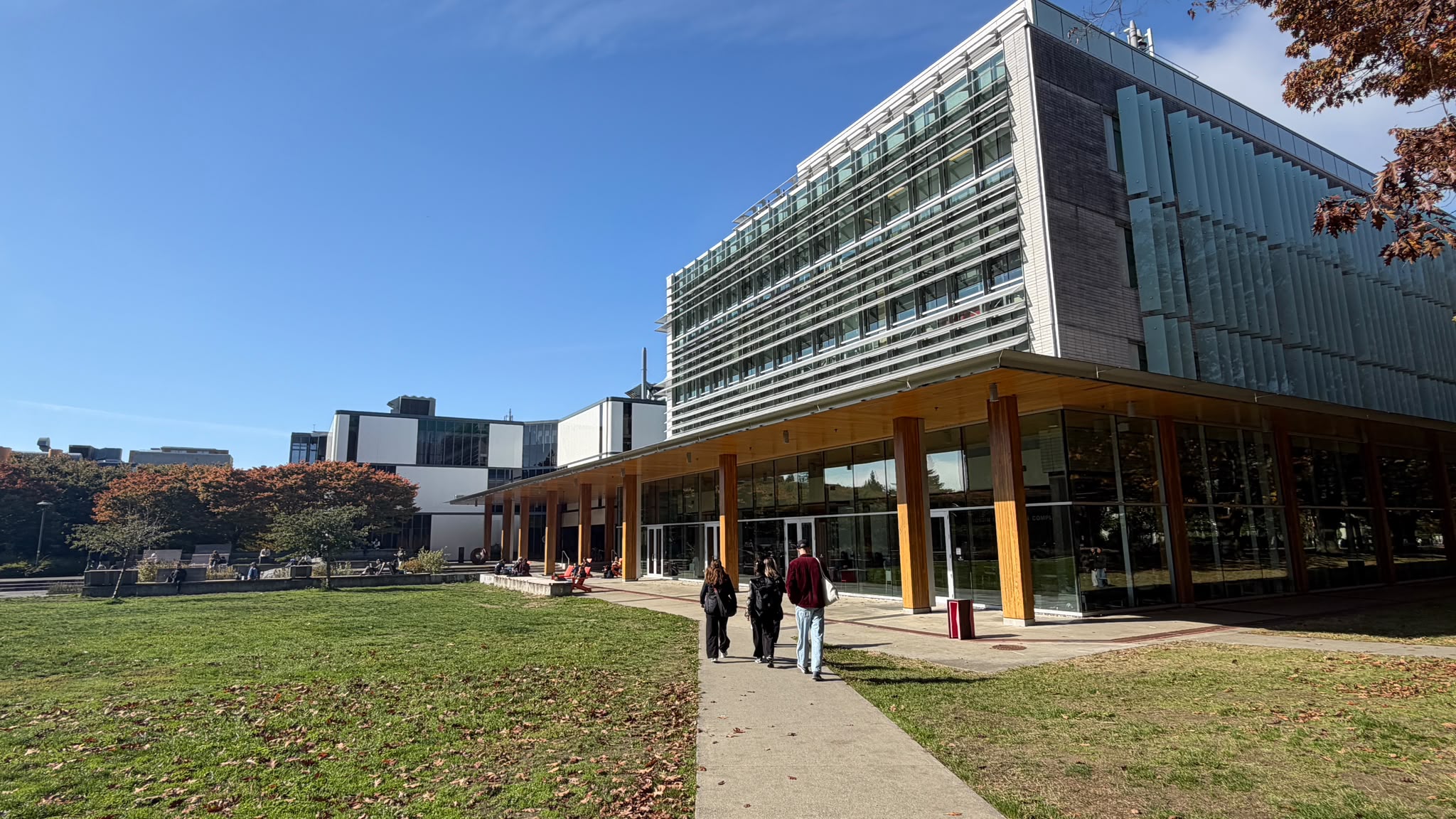
How does university teaching change when student diversity is considered from the outset? At the end of our study tour, part of our delegation visited the University of British Columbia (UBC) in Vancouver. There, we met Dr Jennifer Katz, Associate Professor and Dorothy Lam Chair in Inclusive Education, and developer of the Three-Block Model of Universal Design for Learning. We also spoke with Dr Carly Christensen, Assistant Professor of Teaching in the Faculty of Education, whose work focuses on inclusive education, disability justice and teacher education. A teacher candidate contributed her own perspectives as both a university student and a future teacher.
Universal Design for Learning, or UDL, is an approach to designing learning environments that takes learner diversity into account from the outset. Rather than planning a course for a supposedly homogeneous group and adding individual accommodations only when a need arises, UDL incorporates different needs and circumstances into the initial design. This shifts the focus from removing barriers after they have emerged to creating an accessible learning environment proactively, for the benefit of all students. Individual accommodations may still be necessary, but UDL makes them less likely to be the only means of ensuring participation.
Three questions are central to this approach: How can different students access the course content? How can they engage with it and participate actively in their learning? And how can they demonstrate their knowledge and skills in different ways?
Jennifer Katz has developed these principles further through her Three-Block Model. Its three interconnected areas focus on social-emotional learning and belonging, inclusive instructional practice, and supportive systems and structures. Learning is therefore about more than communicating content. Feeling part of a learning community and experiencing oneself as a capable learner are equally important. Katz summarized this connection in one sentence: “How you teach influences how a student feels.”
In practice, UDL begins with the intended learning outcomes: What should students understand and be able to do by the end of a course? The way in which learning is designed follows from these outcomes. Content can be accessed through different modalities, and students can explore questions independently and collaboratively. As a practical example, Katz described short input or video segments followed immediately by a period of similar length in which students apply, discuss or reflect on what they have learned.
Assessments do not necessarily have to take the same form for every student, provided they assess the same competencies. Academic expectations remain consistent; what varies are the routes students can take and the ways in which they can demonstrate their learning. Katz therefore described UDL as “less of a checklist.” The aim is not to use as many methods as possible, but to design a learning environment that aligns with the intended outcomes and the needs of the particular group.
In this approach, diversity within a learning group becomes a resource. Students contribute different experiences, perspectives and strengths. They explain concepts to one another, compare viewpoints, develop arguments and work together to find solutions. This actively promotes engagement and critical thinking. In a well-functioning learning community, students also support one another, allowing teaching to rely less on continuous instruction and more on guidance and facilitation.
Carly Christensen demonstrated how these principles can be applied in teacher education, even with large student cohorts. All teacher candidates are required to take a course in inclusive education. Clear structures, smaller learning groups within large classes, collaborative learning and different ways of engaging with the content create space for active and shared learning. Graduate students also help facilitate some of the smaller groups and support their learning processes.
The teacher candidate’s account illustrated the significance of UDL particularly clearly. She explained how different approaches to learning and assessment had enabled her to contribute her strengths and demonstrate competencies that were less visible in university courses dominated by text-based learning. As a future teacher, she will now carry these experiences into her own classroom practice.
For UDL to become embedded in higher education, instructors must also be supported in developing their teaching. UBC provides this support through professional learning. In the year-long UDL Fellows Program, instructors redesign their own courses while working with colleagues from different areas of the university. In this way, they learn both with and from one another.
This presents a particular opportunity for teacher education. Teacher candidates do not encounter UDL only as a pedagogical concept; they experience directly how a diverse and flexible learning environment affects their own learning. They can later draw on this experience when designing their own teaching. Alongside theoretical knowledge, this requires compelling practical examples, first-hand experience of different pathways to learning, and ongoing professional development for instructors.
Our visit to UBC marked the end of our study tour in Canada. We return to Bern with a wealth of experiences, practical examples and new questions. One insight is especially important for PHBern: inclusive education is conveyed not only through what we teach, but also through how we design university teaching, learning environments and assessments – and through how we support instructors in developing their practice.