
1 October 2026, Andreas Jäggi (PHBern), Sabine Williner (PHBern)
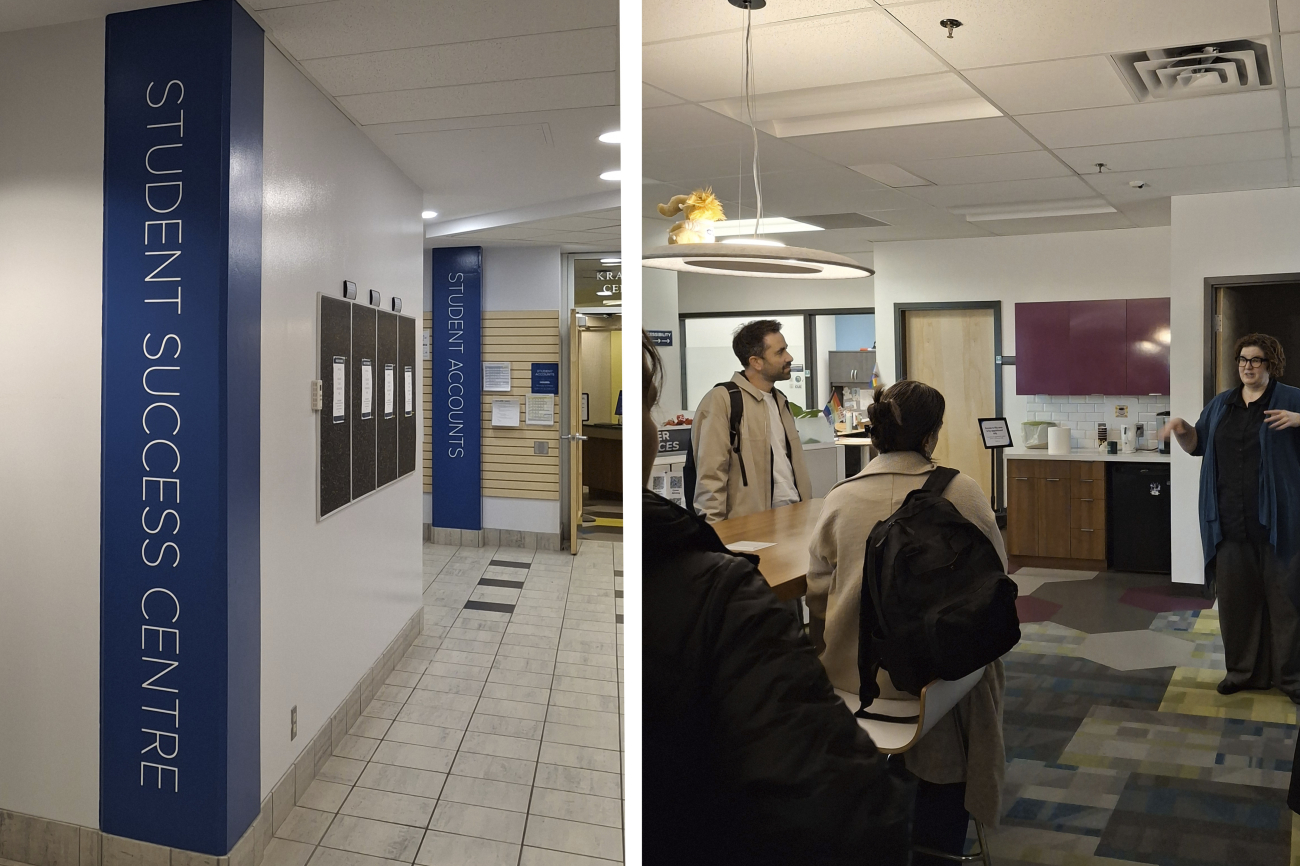
Thursday focused on the question of how students at Concordia University of Edmonton (CUE) are supported throughout their studies. In the morning, the delegation visited the Student Success Centre, which brings together a wide range of services in one place: academic and career advising, Learning Services providing support with study strategies and academic organization, writing support, tutoring and additional learning opportunities for challenging courses, counselling, and Student Accessibility Services (SAS) for students with disabilities or health-related needs. The open and welcoming design of the space is intended to encourage students to seek support easily and without hesitation. Mental health plays an important role in this context. The most common reasons students seek counselling are anxiety, depression, and family-related challenges.
The delegation was then introduced to Student Accessibility Services (SAS). Around ten per cent of CUE students currently receive academic accommodations, and the number is increasing. As in Switzerland, the right to reasonable accommodation is legally established in Alberta. The question, therefore, is not whether accommodations should be provided, but how they can best be implemented. The aim is to remove barriers so that students can fulfil their potential and demonstrate what they are capable of. SAS advises and supports students and also acts as an intermediary when instructors have concerns or when views differ regarding how accommodations should be implemented. A wide range of measures is available and is determined according to each student’s individual needs.
For examinations, CUE has its own Testing Centre. Depending on their needs, students may receive additional time or breaks, a quiet individual workspace, adapted lighting or seating arrangements, assistive technology, or an alternative examination format. Each testing space is set up individually in line with the approved accommodations. Students take their examinations at the same time as their peers, but with the adjustments that have been agreed for them.
Particularly powerful were the personal accounts of two students with disabilities who are enrolled in regular degree programmes. Their experiences highlighted that even the decision to request accommodations can involve uncertainty, for example concerns about being perceived as less capable or about possible implications for their future careers. One student in a teacher education programme explained that her disability has far less impact on her everyday studies when instructors design their teaching according to the principles of Universal Design for Learning (UDL). Accessible teaching can therefore reduce barriers from the outset and, in some cases, reduce the need for individual accommodations.
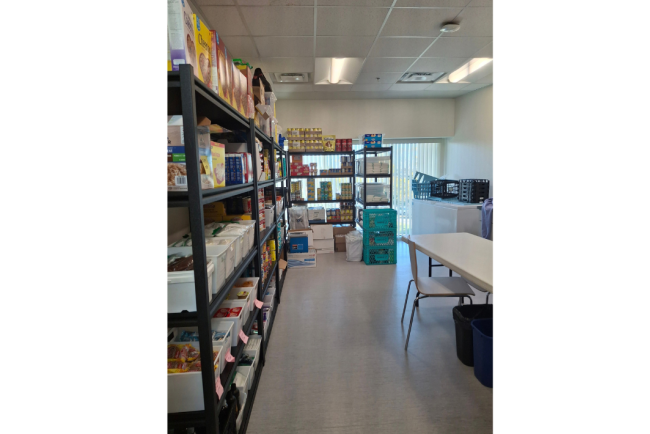
At the end of the morning, the delegation visited the CUE Cupboard. Students experiencing financial hardship can order food and everyday essentials free of charge through an online shop. Students who use the service repeatedly can, where appropriate, be connected with additional forms of financial support. The initiative illustrates the broad way in which student support is understood at CUE: meeting basic needs can also be an important prerequisite for successfully completing a degree.
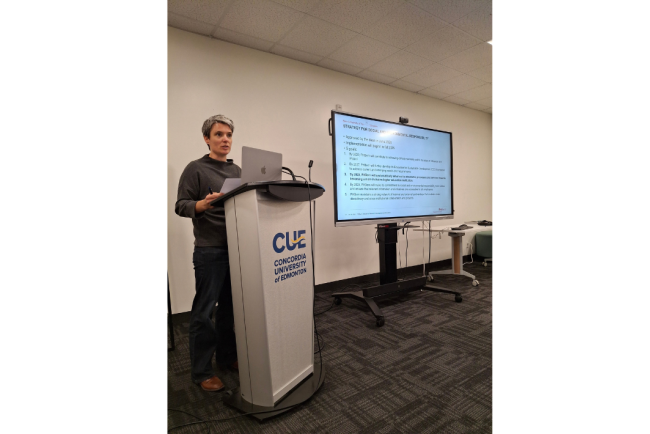
During lunch, the focus shifted to PHBern. Drawing on selected examples, several members of the delegation provided insights into how inclusive higher education development is being advanced internationally, nationally, and within PHBern itself. Initiatives presented included the diploma programme “Fachperson Inklusion” (F-INK), in which people with disabilities are trained as experts by experience, degree programmes with an explicit focus on inclusion, and the specialist service for accessible studying and working. The strategic integration of inclusive higher education development at PHBern was also discussed. The approaches presented were subsequently explored with representatives from different areas and roles at CUE, including university leadership, research, the Student Success Centre, and students.
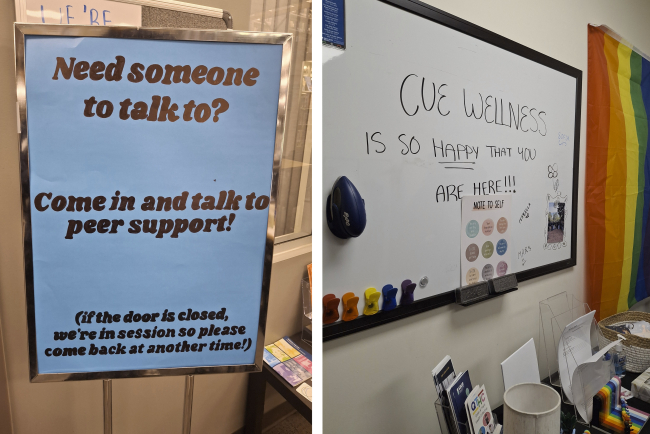
In the afternoon, the focus was on CUE Wellness. The team promotes student well-being and mental health, placing strong emphasis on active student involvement. Trained students serve as Wellness Educators and Volunteers and, among other activities, offer confidential drop-in peer support. One volunteer described how much she enjoys supporting fellow students and how her involvement has also strengthened her own sense of belonging within the university community. Interest in the programme is high, with more applications than available volunteer positions.
The way in which CUE Wellness develops its activities is also noteworthy. Rather than relying primarily on traditional workshops, the team brings topics such as mental health, suicide prevention, and financial well-being directly into the spaces where students already spend their time. Low-threshold formats, such as mocktail parties in the main entrance area, create opportunities for informal encounters and conversations. The team experiments with different formats, listens to students, and expands the approaches that genuinely reach them. The underlying principle is clear: support should be visible, easily accessible, and an integral part of everyday university life. Well-being is therefore understood as an important prerequisite for participation and academic success.
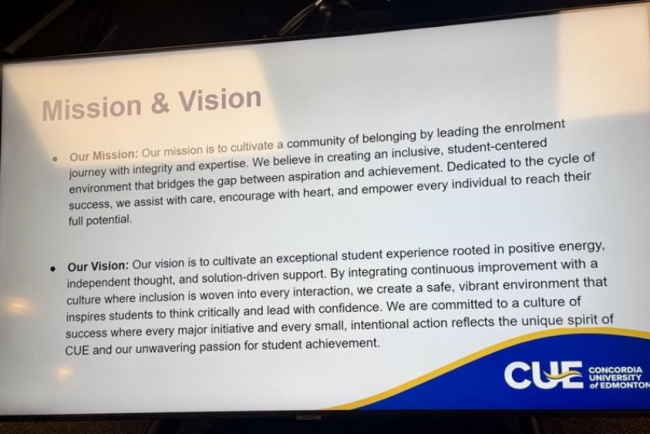
At the end of the day, the Student Enrolment Service (SES) introduced its work. The service is responsible for admissions, enrolment, student funding, and scholarships, and is an important first point of contact for many students. Inclusive values and an appreciation of diversity are firmly embedded in the SES mission statement (see image). Staff regularly receive training on topics such as LGBTQ2S+ inclusion, disability, and cultural diversity. Attitudes and values are also considered important when recruiting new staff: professional knowledge can be learned, but what matters most is how students are treated.
Concrete examples illustrated how this approach is reflected in everyday practice. Students supported by Inclusion Alberta who attend CUE as non-degree students have full access to the university’s support services. Students can also easily indicate the name and gender with which they wish to be recorded in university systems and addressed in external communication.
Throughout the day, it became clear how consistently the appreciation of diversity and the goal of student success are embedded across the university. Relationships, personal accessibility, and low-threshold support are central to this approach. Inclusion is therefore not regarded as the responsibility of individual specialist services, but as something that is considered across different areas of everyday university life.


One key message accompanied us as we reflected on the next steps: every small step matters. This is also encouraging when considering how the insights from the visit might be transferred to PHBern. Inclusive higher education development requires structural change, but it also depends on many concrete improvements in teaching, assessment, advising, support services, and everyday interactions. Taken together, these measures can help reduce barriers and promote student success.
For a university of teacher education, this is particularly important: high-quality study conditions contribute to the education of well-prepared teachers and other education professionals and, ultimately, also benefit the students they will go on to teach.
This article reflects the personal impressions of its authors.