
24.08.2026
Research on Inclusive Education Takes Part in an International Exchange in Finland
From 17 to 21 August 2026, PHBern’s Research Programme on Inclusive Education was represented at three international research conferences in Finland. At the Finnish Educational Research Conference (FERA), the European Conference on Educational Research (ECER) in Tampere, and the European Association for Research on Learning and Instruction (EARLI SIG 15) Conference in Helsinki, researchers presented their latest work on well-being, inclusive education, inclusive school leadership and educational transitions, contributing to international academic exchange.
17–18 August: FERA Conference on Education in Tampere
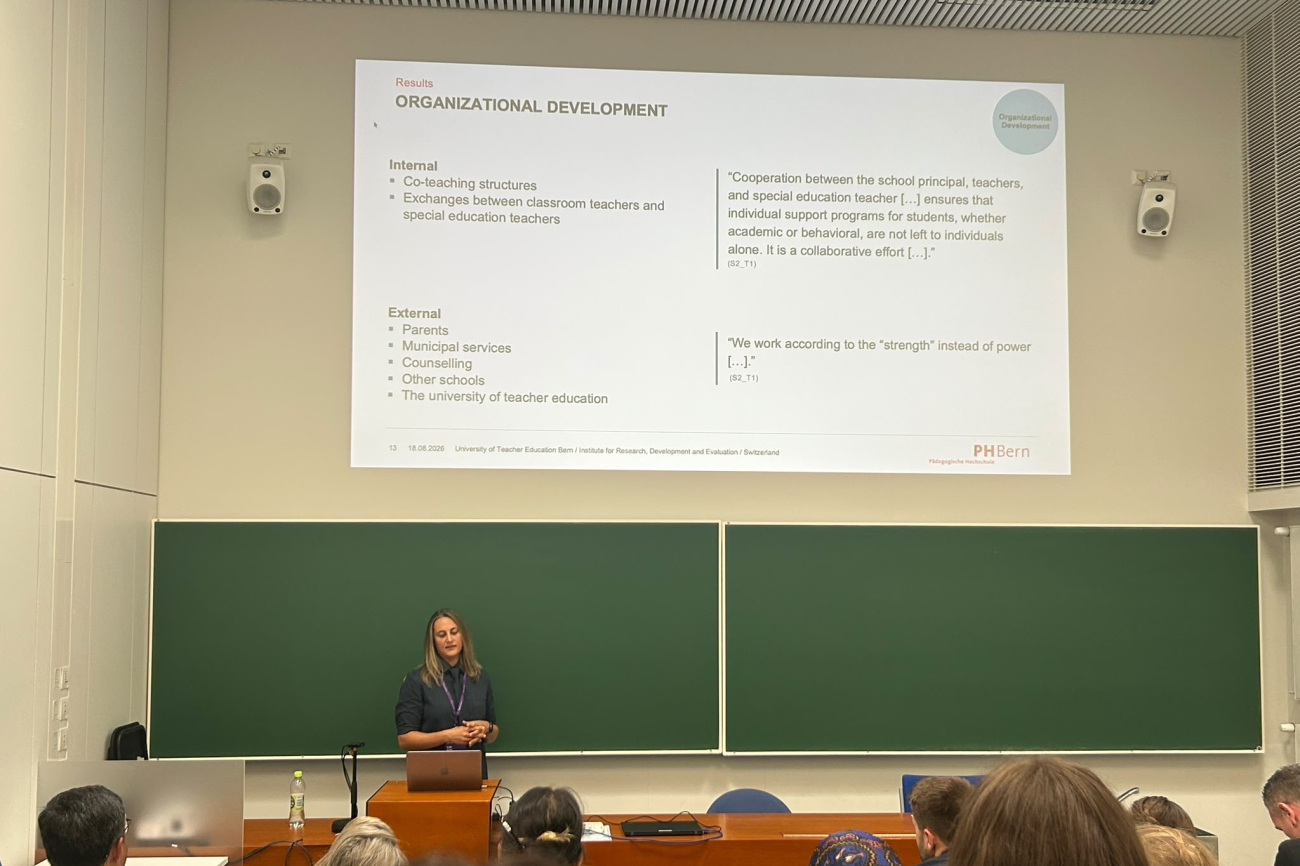
The conference week began with FERA at Tampere University. Under the conference theme ‘Educational Science Knowledge and Societal Impact – Do We Have the Power?’, the focus was on the societal relevance of educational research. In the thematic area of well-being and education, researchers from different countries discussed new approaches to conceptualising and measuring the well-being of students and teachers. Katja Saxer’s contribution and the subsequent discussion session with Heta Tuominen (University of Eastern Finland) and Anni Holmström (University of Turku) addressed questions including what constitutes well-being in a school context, how it can be measured, and how negative dimensions such as burnout can also be taken into account.
17–19 August: EARLI SIG 15 Conference in Helsinki
At the same time, the EARLI SIG 15 Conference, ‘Research methodological approaches bridging special educational needs’, took place at the University of Helsinki.
The umbrella review ‘Academic outcomes of students with and without special educational needs in inclusive education’, jointly conducted by Silvia Dell’Anna (Università degli Studi eCampus, Italy), Sergej Wüthrich, Robin Benz and Caroline Sahli Lozano, was presented at the conference. It encompasses 15 systematic reviews and meta-analyses spanning four decades and synthesises the state of research on inclusive education and the academic development of students with and without special educational needs.
18–21 August: ECER 2026 in Tampere
From 18 August, ECER brought together researchers from around the world at Tampere University. PHBern’s Research Programme on Inclusive Education was represented by several contributions:
Katja Saxer presented a study entitled ‘Teacher perspectives on inclusive school leadership: a qualitative multiple case study in Switzerland’. The study examines how teachers in Switzerland experience the inclusive leadership practices of their school leaders and the importance of a shared commitment to inclusion, an open communication culture, collaboration and professional development.
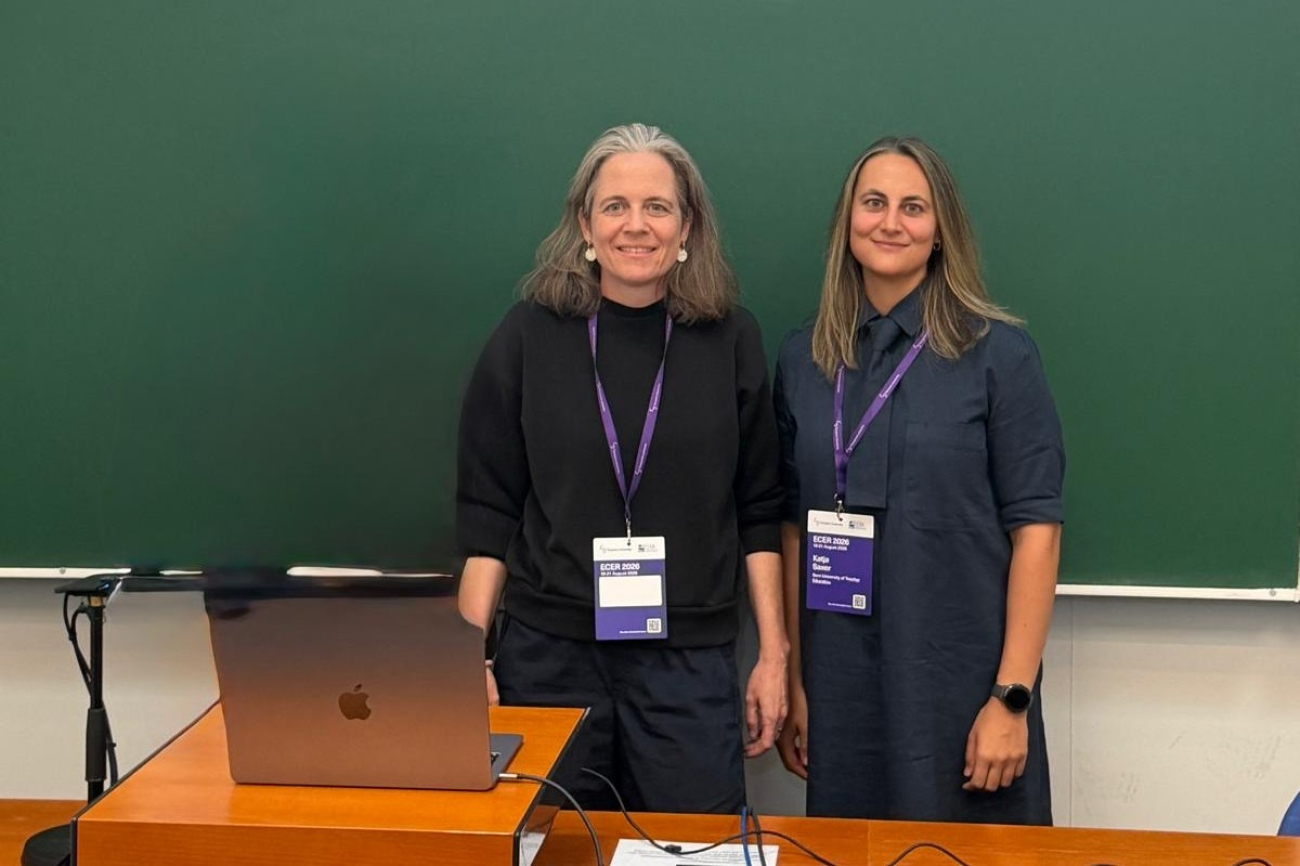
Together with Carmen Zurbriggen (Université de Fribourg, Switzerland), Caroline Sahli Lozano organised and chaired the international symposium ‘From Classroom Measures to Labour Market Gateways’. Contributions from Switzerland, Luxembourg and Germany explored different stages of these transitions, ranging from school-based support measures and their longer-term consequences to recruitment processes, employers’ decisions and institutional frameworks. Sara Lustenberger presented findings from the LABIRINT II project on the effects of inclusive school-based measures on the transition to upper-secondary education.
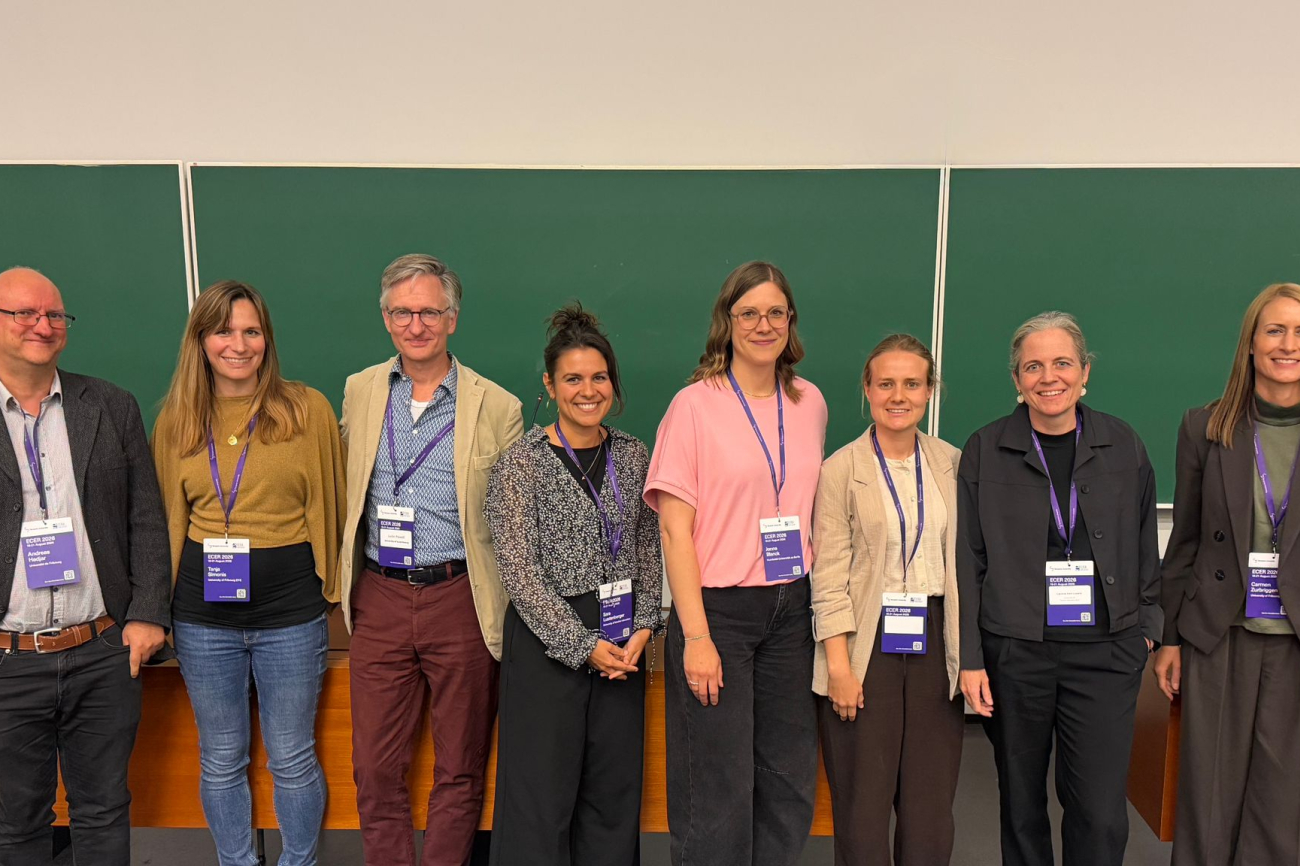
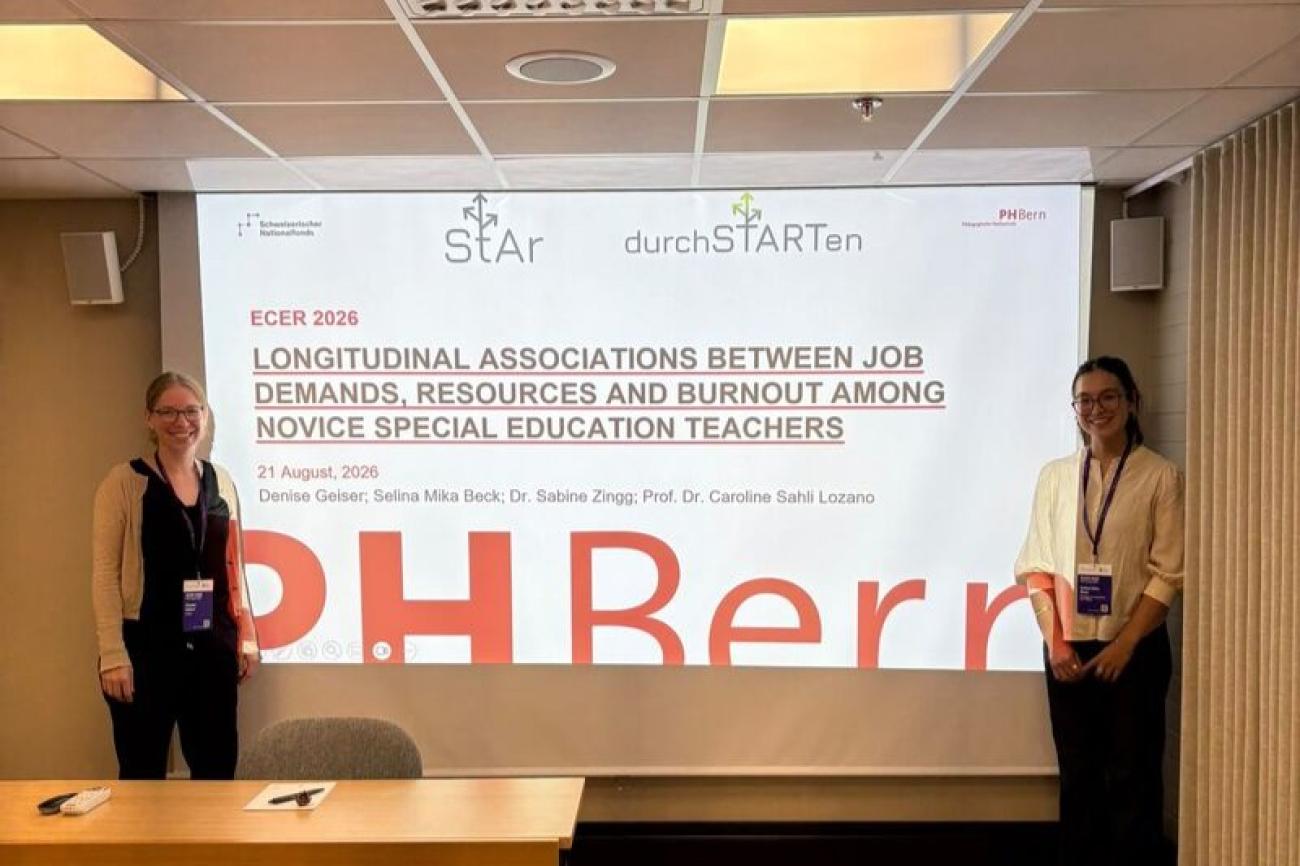
Finally, Denise Geiser chaired the symposium ‘Occupational Well-Being of Professionals in Schools’, which brought together perspectives from Switzerland, Italy and Finland. Together with Selina Beck, she presented findings from the durSTARTen project on job demands, burnout and intentions to leave the profession among early-career special education teachers.
A key message emerging from the symposium was that the well-being of professionals working in schools depends not only on individual resources, but also on supportive working conditions, collaboration and organisational structures.
The intensive conference week offered a wide range of opportunities to discuss PHBern’s research with international colleagues, bring together different perspectives and strengthen existing connections. The many conversations and contributions provided fresh impetus for future work and once again highlighted the value of international exchange for research on inclusive education.
Further Links: